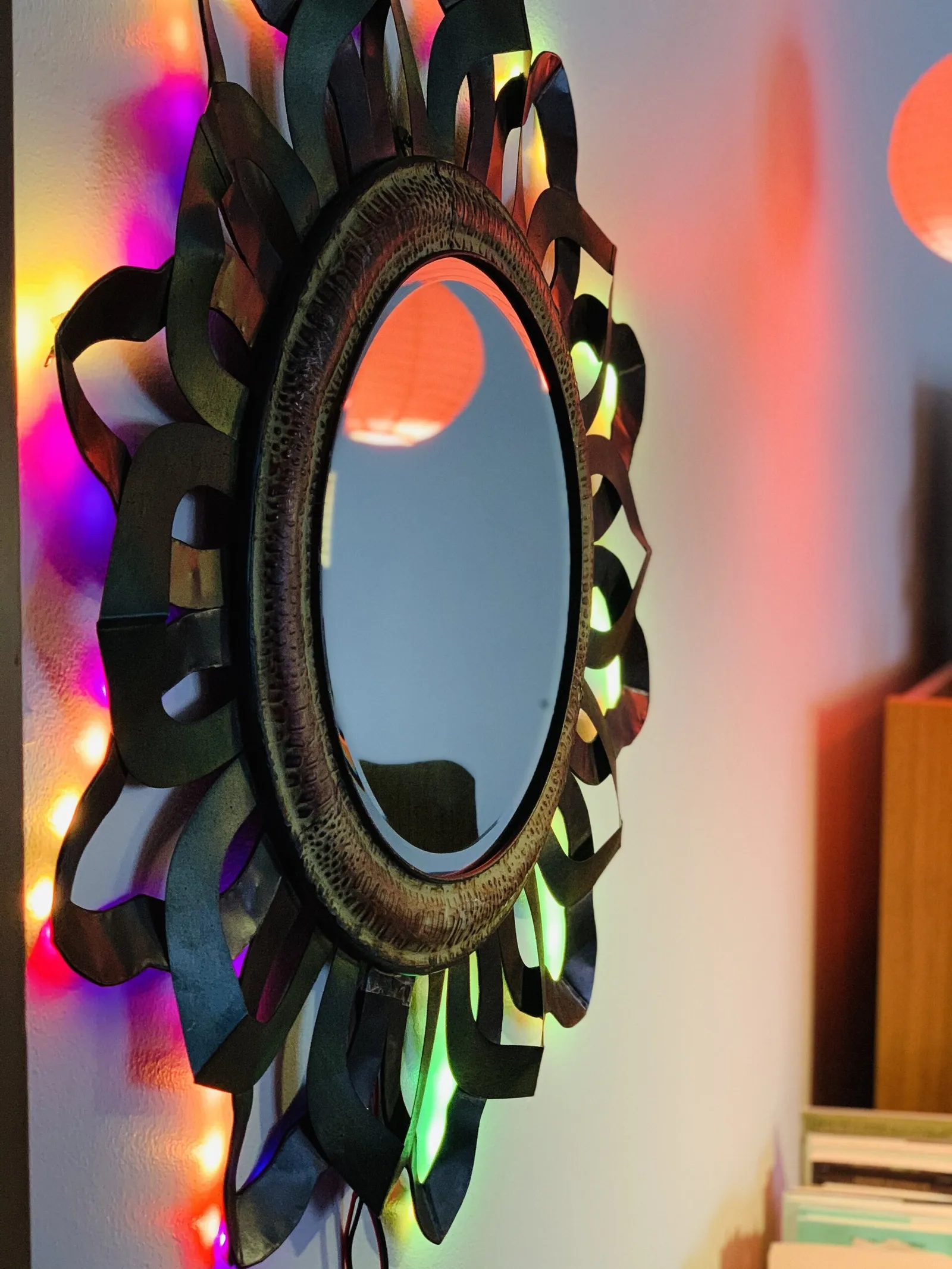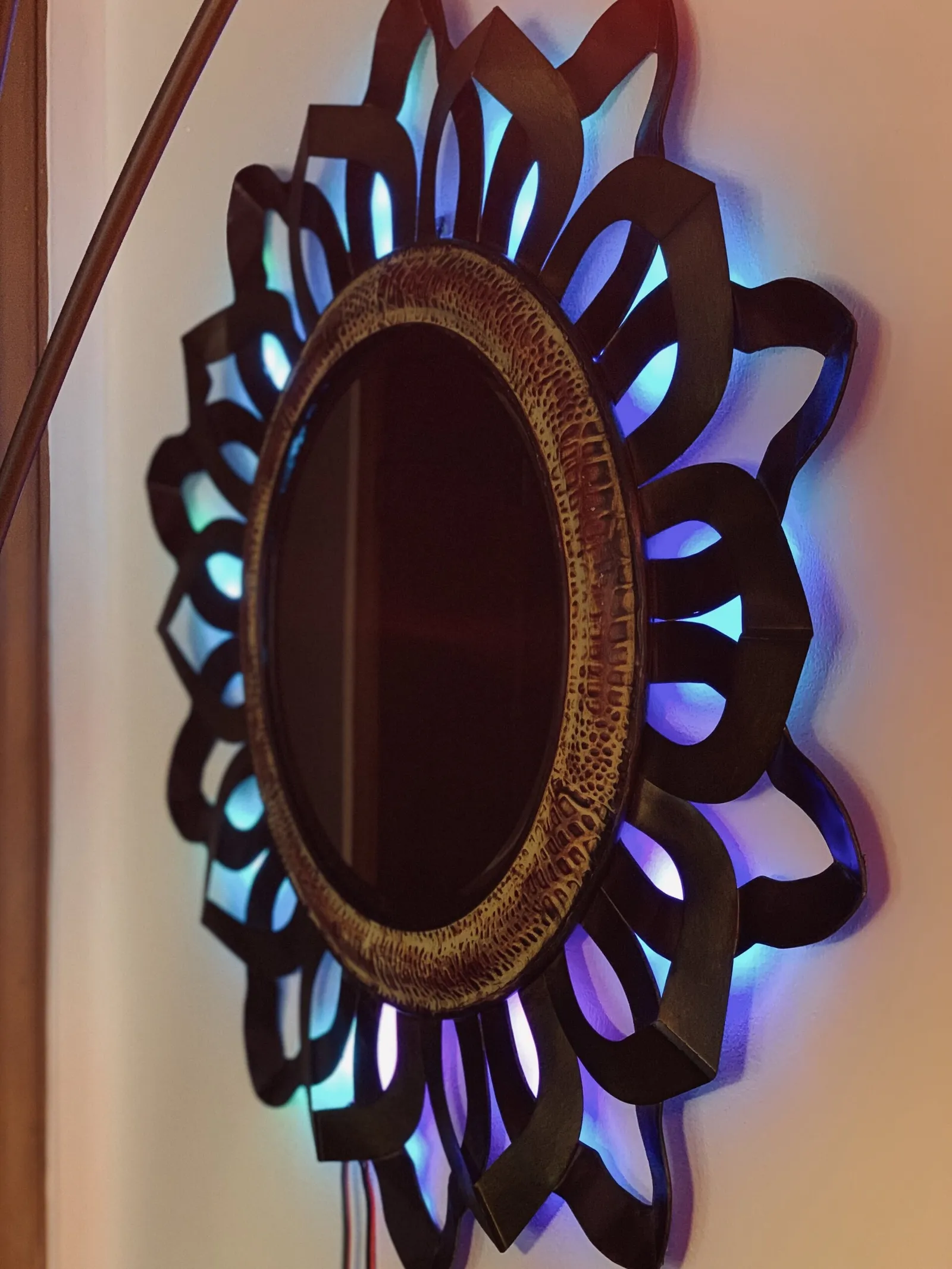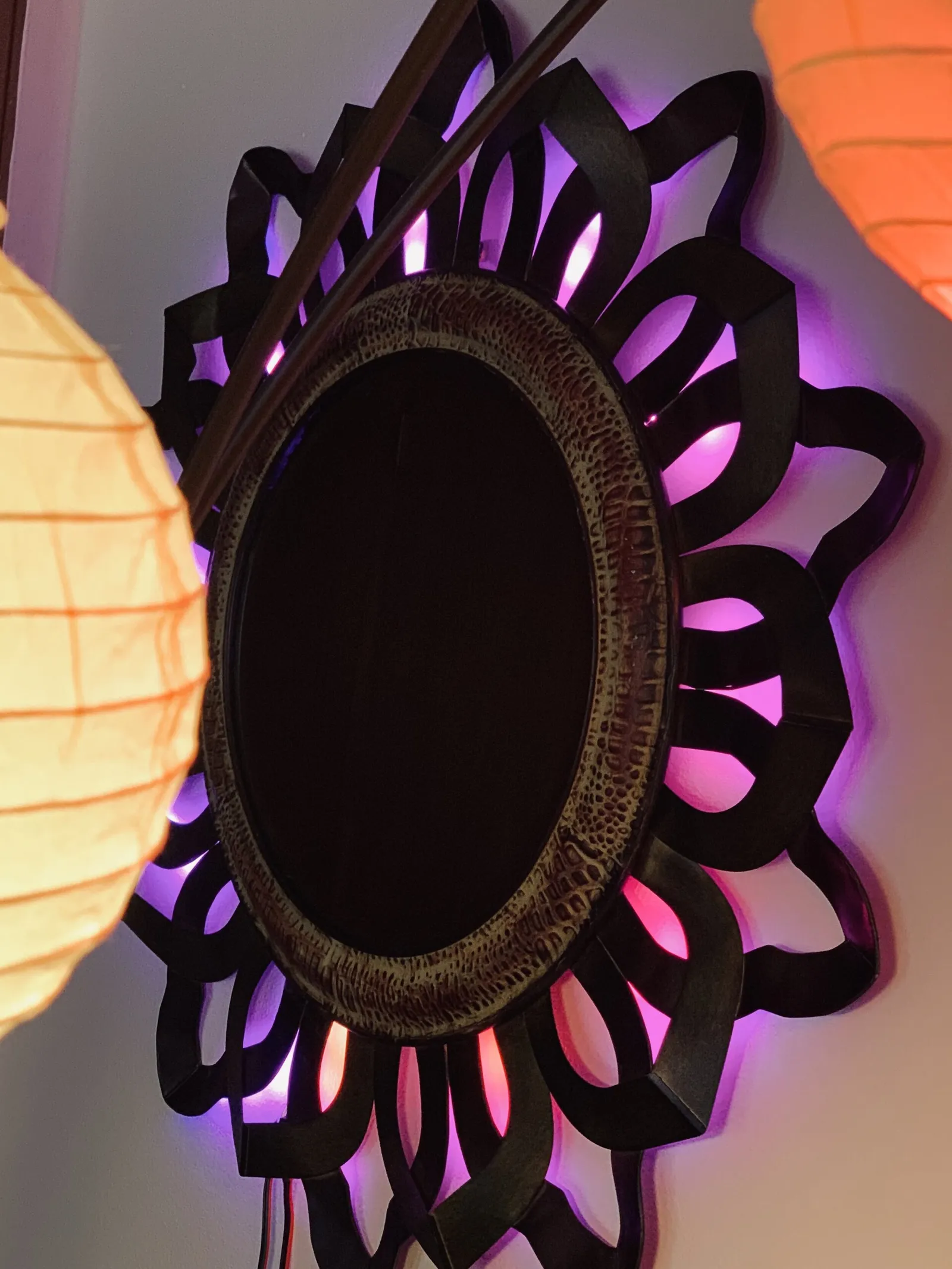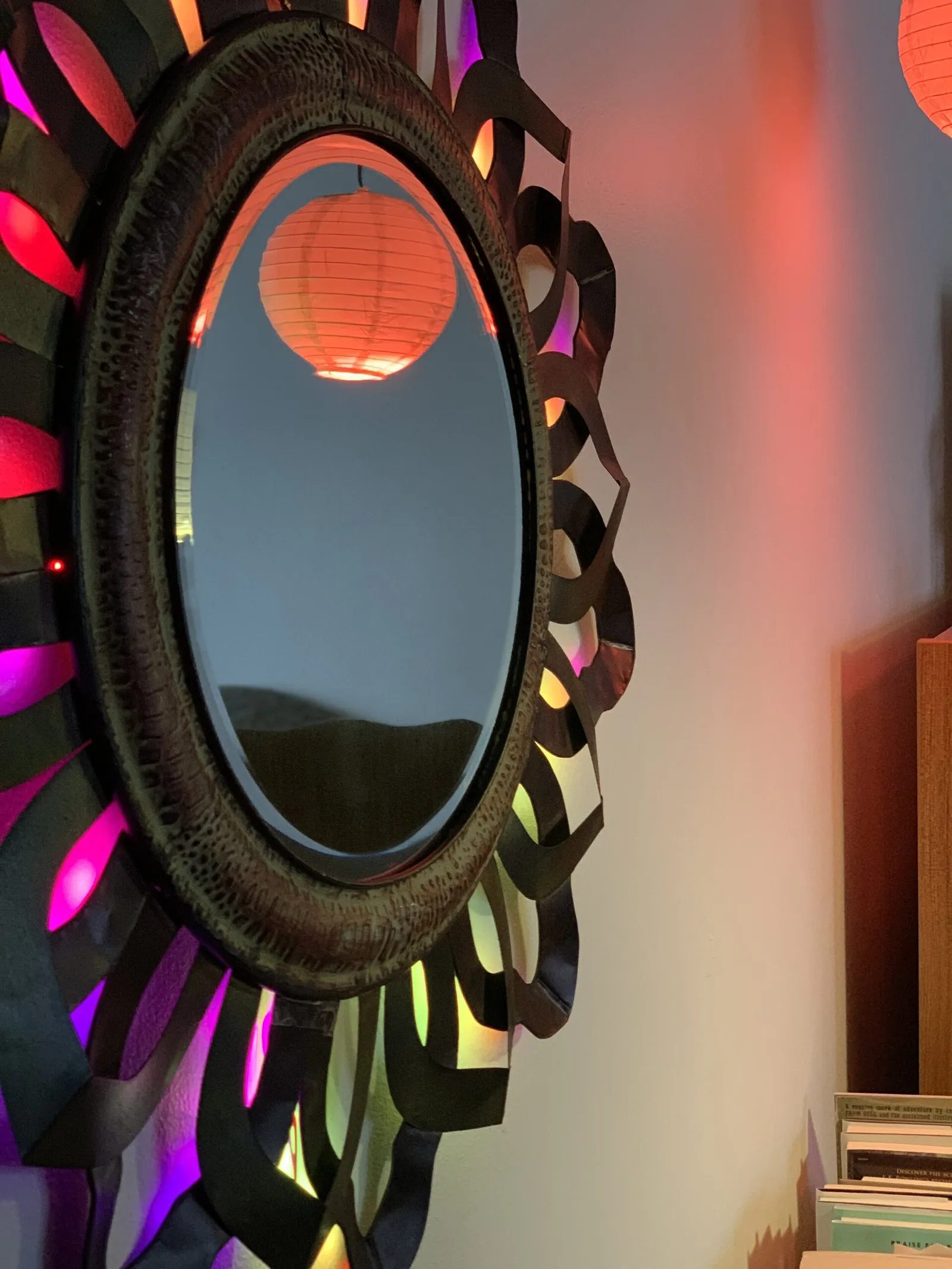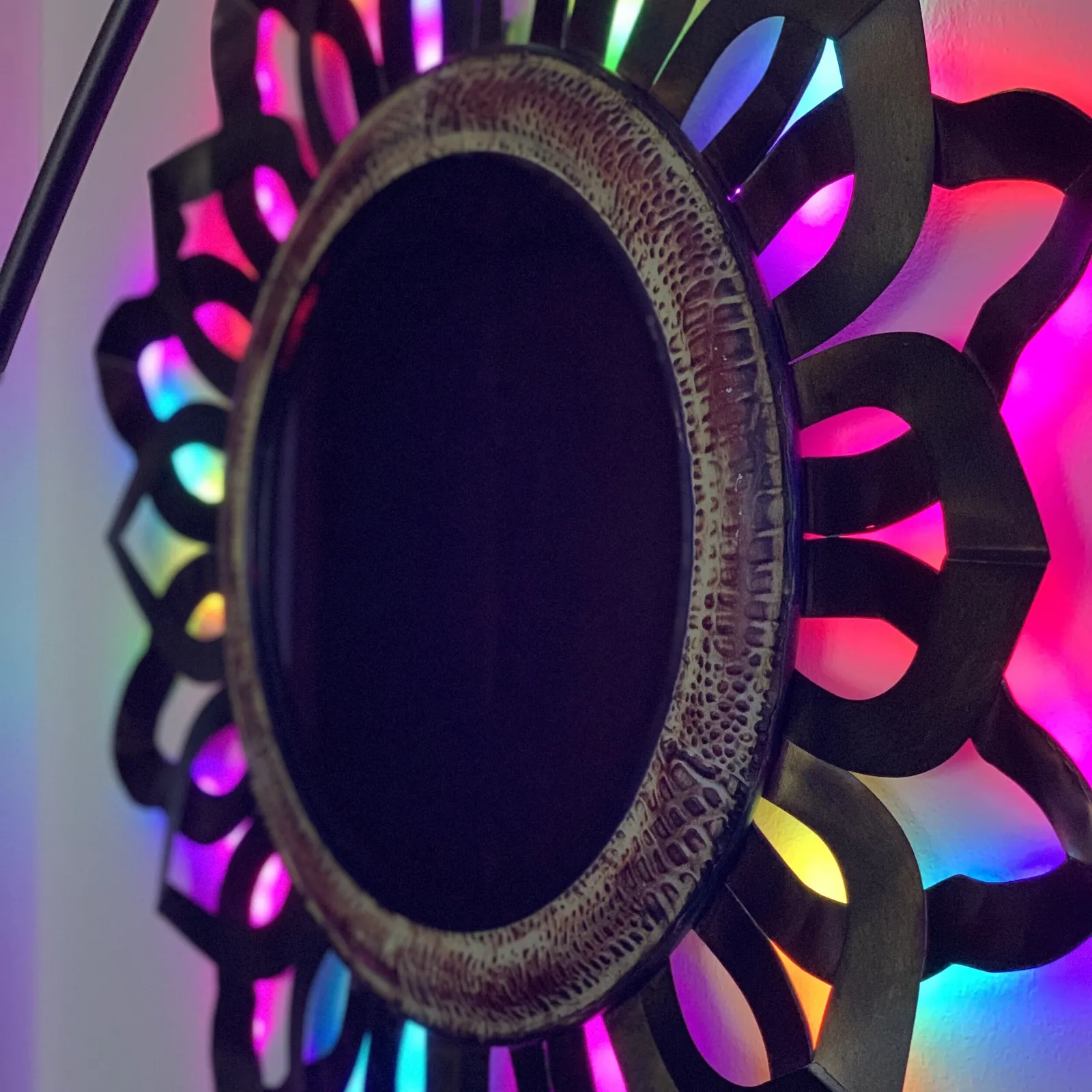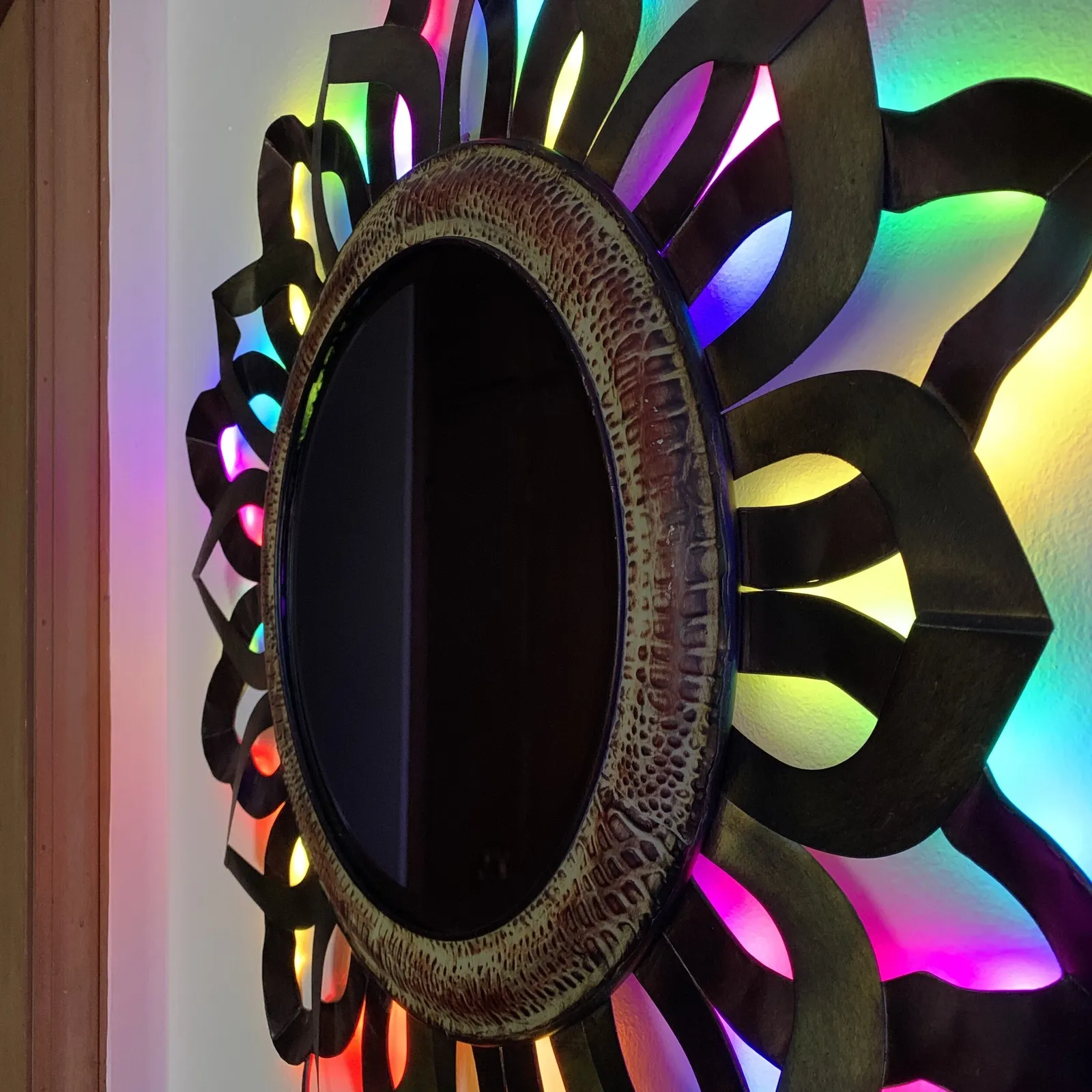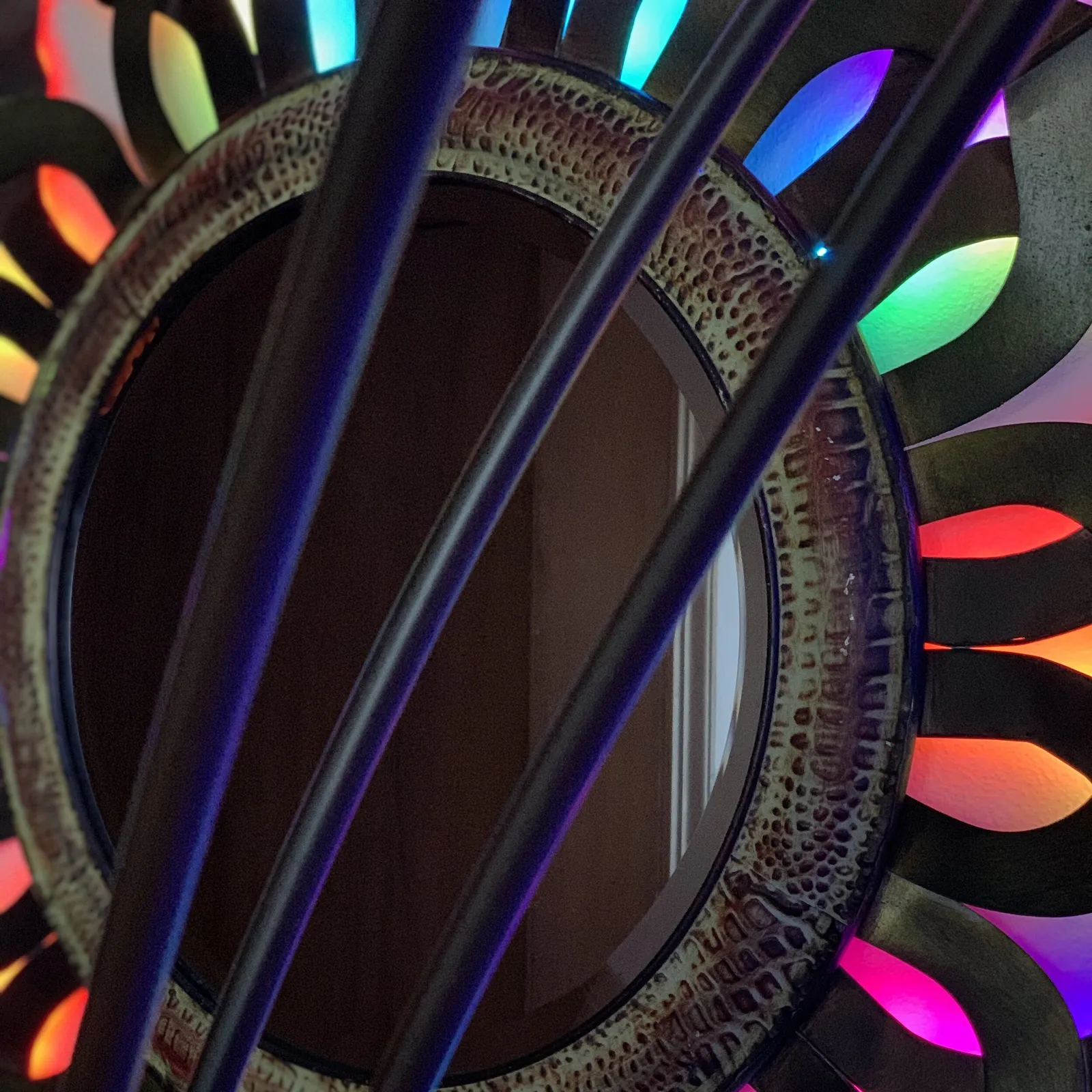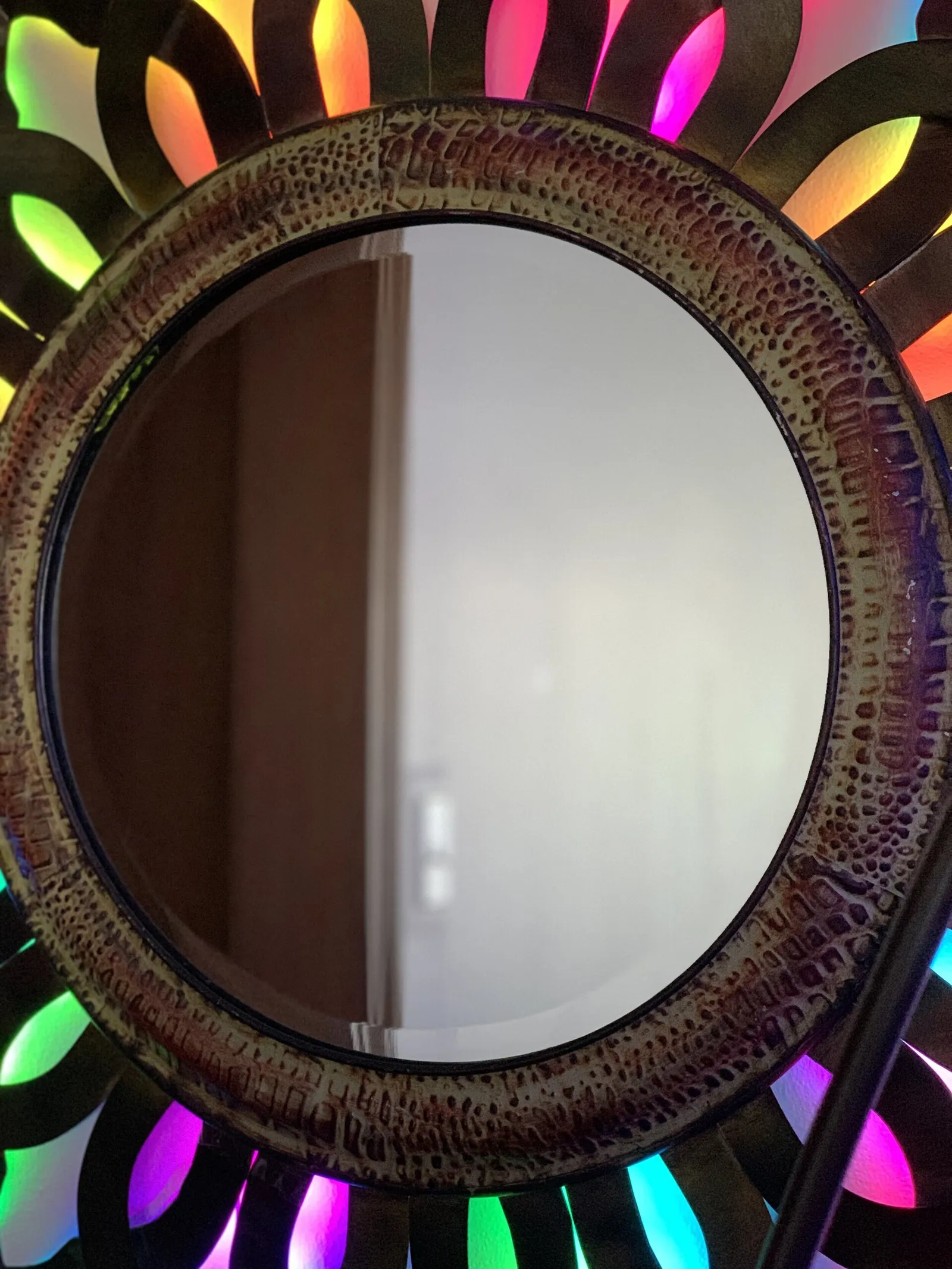
Solaris
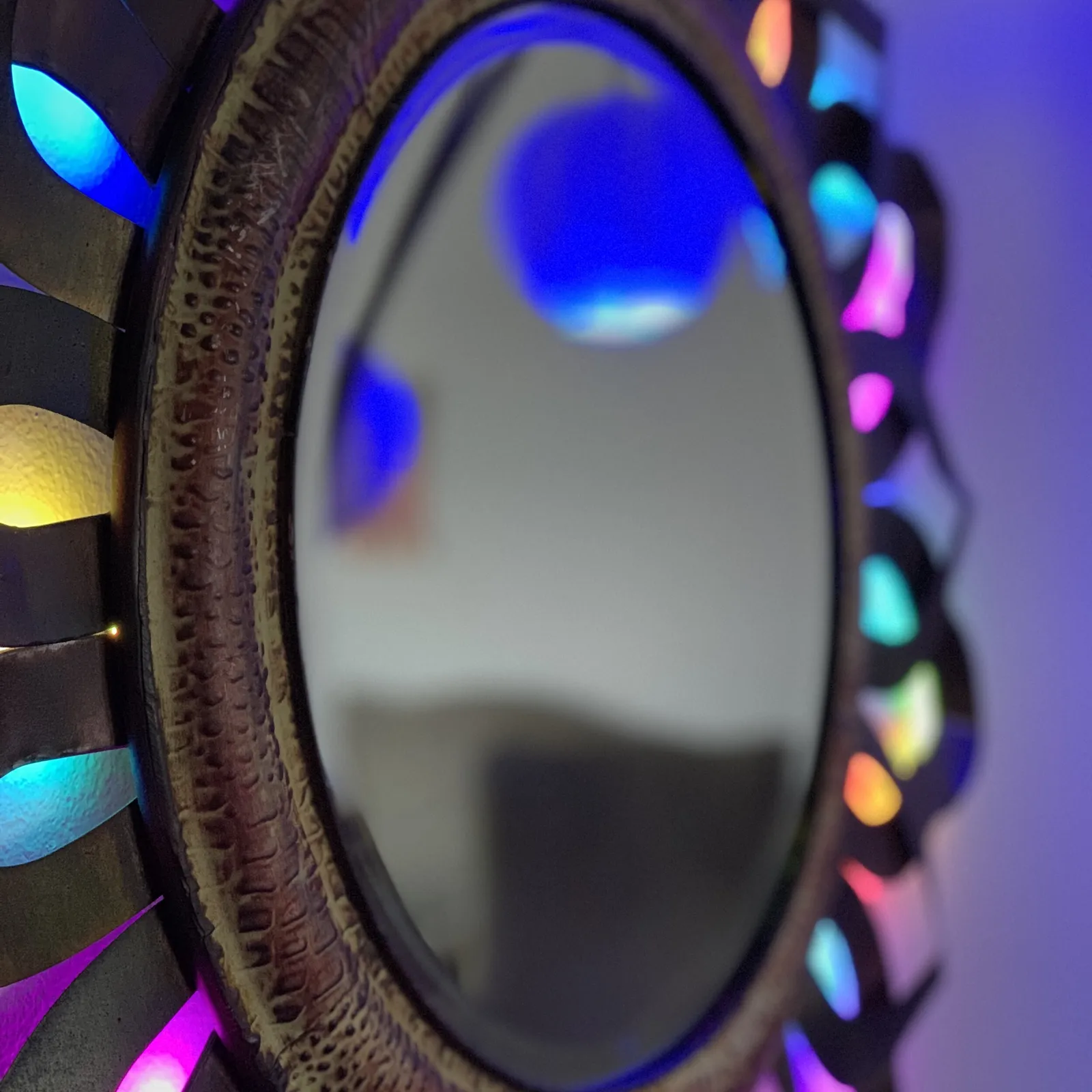
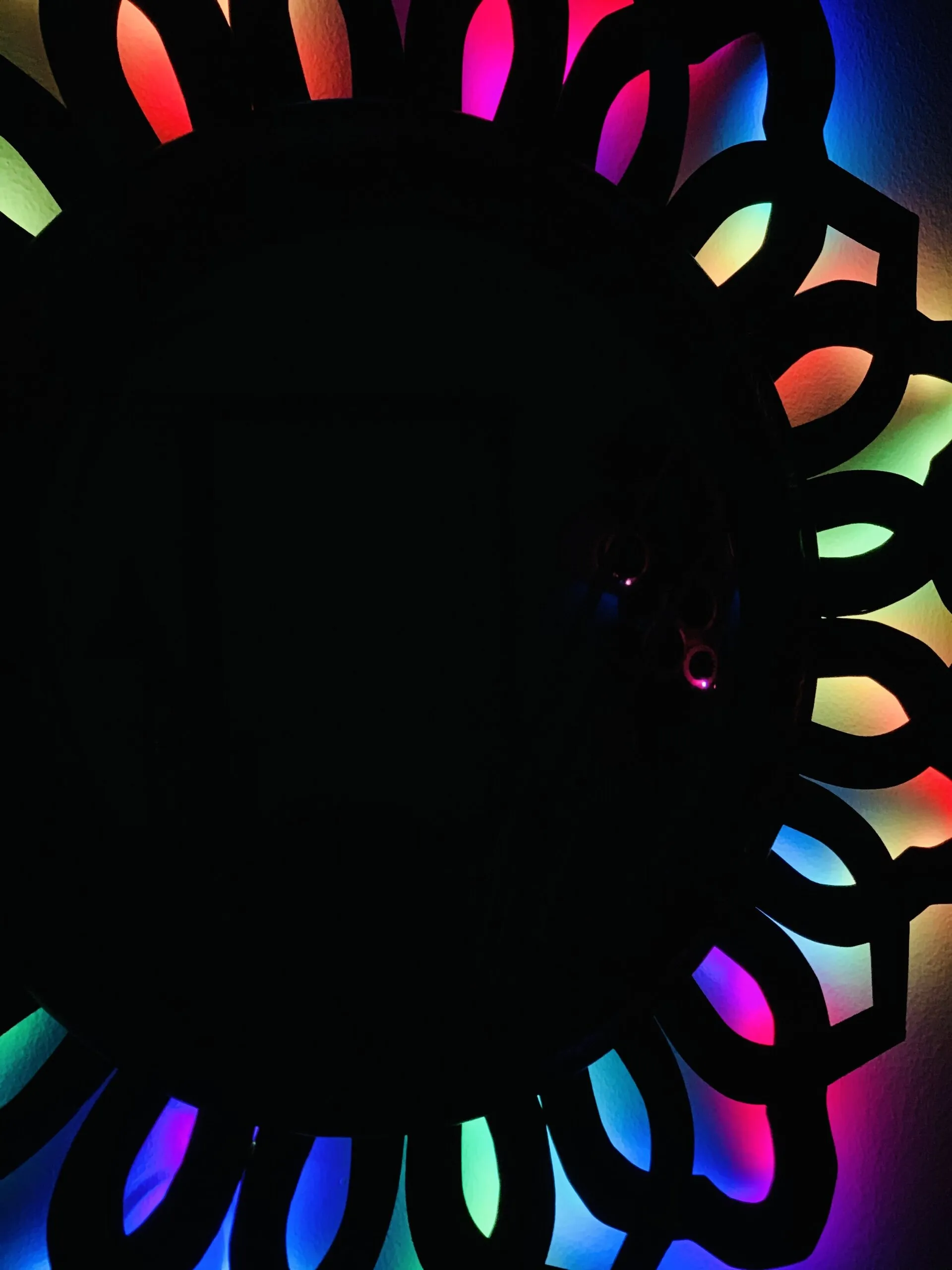
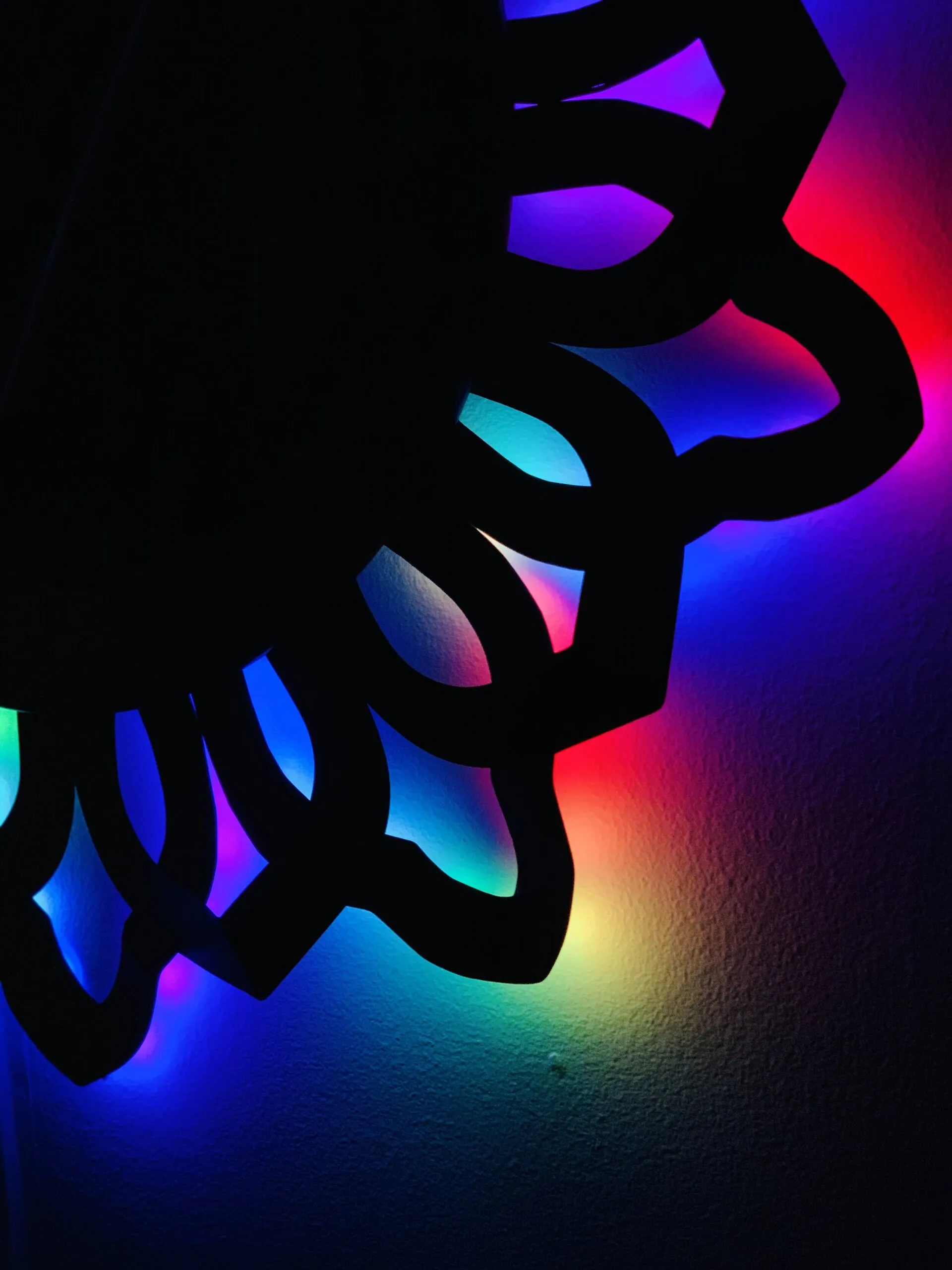
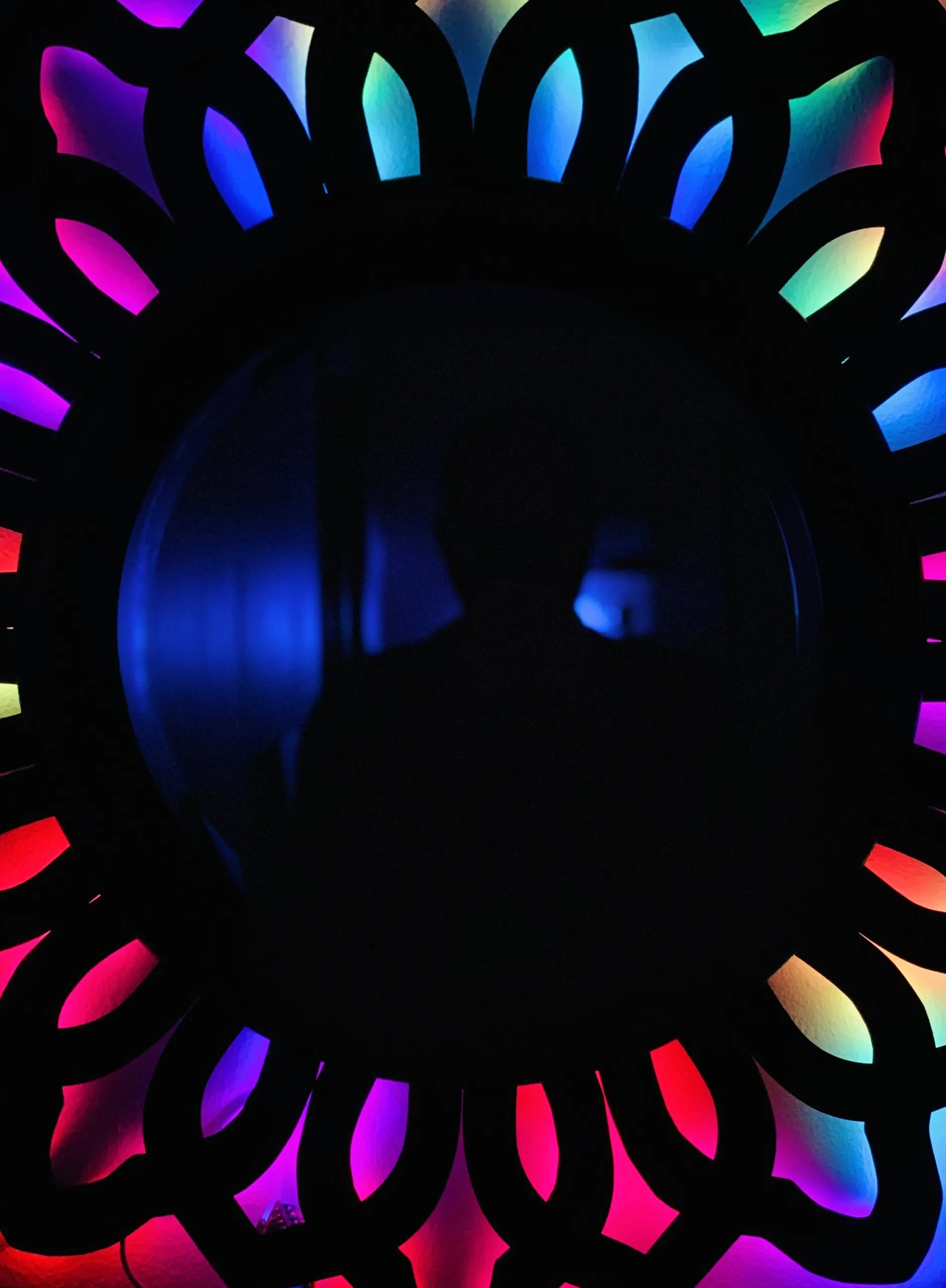
Thrifted sculpture and LED tape: an upcycled, atmospheric light that rises and sets like the sun.
- Year
- 2020
- Materials
- Thrifted sculptural mirror, WS2812b LED tape (5V), Pixelblaze microcontroller
Repeating on the techniques used to create Nebula, this piece is a combination of thrifted sculpture and LED tape to create an eye-popping, upcycled, atmospheric lighting experience.
Materials:
- Thrifted sculptural mirror
- WS2812b LED tape (5V)
- Microcontroller (Pixelblaze)
- Battery pack, or wall power transformed to 5V
- USB cable
- JST 3-pin connector cables
The code
Below is a rough draft of the code driving Solaris through the Pixelblaze microcontroller. The effect is meant to mimic the rising and setting of the sun using time-based animation sequences.
//SOLARIS Scheduled Percent-On Demo by @CODYRYANDESIGN

//This example demonstrates one way to use the built-in functions for monitoring time
//to cause gradual time-based changes in your light show
export var _hour
export var _minute
export var _second
//a decimal representation of the current time
export var currentTime
//scheduled start time
export var bTime
//scheduled end time
export var eTime
//use this slider to set the start time for the program
export function sliderBeginTime(begin) {
  bTime = floor(24*begin)
}
//use this slider to set the end time for the program
export function sliderEndTime(end) {
  eTime = floor(24*end)
}

//how long the program will be on
export var numHoursOn
//how long the program will be off
export var numHoursOff

//the calculated 'on' percentage based off the current position in the schedule
export var percentOn

function calcPercentOn(hr, min, sec, beginTime, numHrsOn) {
  //each minute contributes 1/60th of an hour
  minFraction = min/60
  //each second contributes 1/3600th of an hour
  secFraction = sec/3600
  //add additional time from current minute and second
  currentTime = hr + minFraction + secFraction

  //calculate the 'percentage on' based on the current time in the schedule
  pOn = (currentTime - beginTime) / numHrsOn

  return pOn
}

//rotational speed of the effect
export var speed

export var h
export var s
export var v
// export function sliderHue(hue) {
//   h = hue
// }

export var test = .9
export function sliderTest(test) {
  t = triangle(test*100)
}

function InputMap(input, in_min, in_max, out_min, out_max)
{
return (input - in_min) * (out_max - out_min) / (in_max - in_min) + out_min;
}

PI10 = PI2*5
PI6 = PI2*3

export function beforeRender(delta) {
  //grab current hour
  _hour = clockHour()
  //grab current minute
  _minute = clockMinute()
  //grab current second
  _second = clockSecond()

  numHoursOn = eTime - bTime
  if(numHoursOn < 0) {
    numHoursOn = 24 + numHoursOn
  }
  numHoursOff = 24 - numHoursOn
  //If within the scheduled on time
  if(_hour >= bTime && _hour < eTime) {
    //plug all time info into the function to calculate 'percentage on'
    percentOn = calcPercentOn(_hour, _minute, _second, bTime, numHoursOn)
    //if we are outside the scheduled time of operation, set percentOn to 0
  } else {
    percentOn = 0
  }

  t1 = time(.3)*PI10
  t2 = time(.05)*PI2
  t3 = time(.04)*PI2

}

export function render(index) {
  //triangle-map percentOn to a new variable
  trianglePercentOn = triangle(percentOn)
  h = InputMap(trianglePercentOn, 0.0, 1.0, -0.001, 0.1)
  triMap = InputMap(trianglePercentOn, 0.0, 1.0, 10, 12)
  //manipulate speed based on a triangle-mapping from percentOn
  speed = percentOn <= .5 ? triMap : -1 * triMap


  s = 1.5 - trianglePercentOn   - sin(index*PI10/pixelCount*speed + t1)
  s = s*s*s
  b = sin(index*PI6/pixelCount - t2)
  c = triangle((index*3/pixelCount + 1 + sin(t3))/2 % 1)
  v = (s+b+c)/6
  v = v*v
  hsv(h - random(.01), s, v*trianglePercentOn)
}